Living small doesn’t mean sacrificing comfort or functionality. Tiny house owners and apartment dwellers face a genuine challenge: fitting all the appliances needed for daily life into minimal square footage. The right tiny house appliances can make the difference between a cramped space that frustrates you and a small home that actually works. In 2026, manufacturers have stepped up their game, designing units specifically engineered for compact living without cutting corners on performance. This guide walks you through selecting the best appliances for your small space, covering the kitchen, laundry, bathroom, and climate control with practical criteria and real-world solutions.
Table of Contents
ToggleKey Takeaways
- Choose tiny house appliances prioritized by daily use and actual capacity rather than marketing claims, ensuring they deliver full functionality in compact footprints.
- Energy-efficient and ENERGY STAR certified tiny house appliances generate less heat and waste, which is critical in tight quarters where utilities and climate control matter most.
- Multi-functional units like Instant Pots, air fryers, and combo washer-dryers maximize limited space, while portable alternatives offer flexibility when permanent installation isn’t feasible.
- Measure twice and verify actual dimensions in person before purchasing, as ‘compact’ claims often mask depth and clearance issues that won’t fit your space.
- Factor installation costs ($300–$800+) into your budget for venting, plumbing, and electrical work, and confirm your tiny home’s power supply capacity before buying high-wattage appliances.
- Pair your appliances with proper ventilation, exhaust fans, and dehumidifiers to control moisture and heat buildup, protecting both your structure and living environment.
Understanding Tiny House Appliance Needs and Priorities
Before shopping, you need to understand what makes an appliance suitable for tiny house living. Size is obvious, but it’s not the only consideration. You’re looking for units that deliver full functionality in a compact footprint, often with innovative design features like stackable washers and dryers or combination units.
Prioritize appliances based on your daily routine. A coffee maker might seem essential, but if you’re not a coffee drinker, it’s wasted counter space. Ask yourself which appliances you actually use daily, which ones you use weekly, and which ones are “nice to have.” This honest assessment prevents buyer’s remorse and keeps your space livable.
Ventilation and clearance matter more in tiny homes. Standard appliances need breathing room, refrigerators need air circulation around the condenser coils, and cooking appliances need ventilation to remove heat and moisture. Measure your space carefully, including height clearance and the depth you can spare. Also consider whether you need a unit that can be recessed or if it sits flush with cabinets.
Energy efficiency takes on extra importance in small homes. Efficient appliances generate less heat and use less power, both critical in tight quarters where waste heat affects your whole living environment. Look for ENERGY STAR certified models when possible.
Essential Kitchen Appliances for Compact Spaces
The kitchen is the heart of most homes, and in a tiny house, it’s often the most space-constrained area. Your strategy here is ruthless prioritization and smart product selection.
Start with the refrigerator, it’s non-negotiable. Standard full-size models won’t fit, but compact refrigerators come in 24 to 32 inches wide and work surprisingly well for one to two people. Look for models with actual usable shelf space, not awkward layouts that waste room. Some compact units now include small freezer compartments without sacrificing cooling capacity.
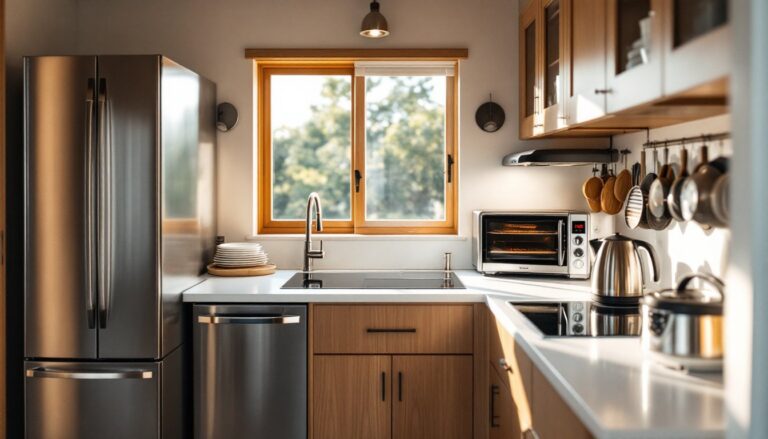
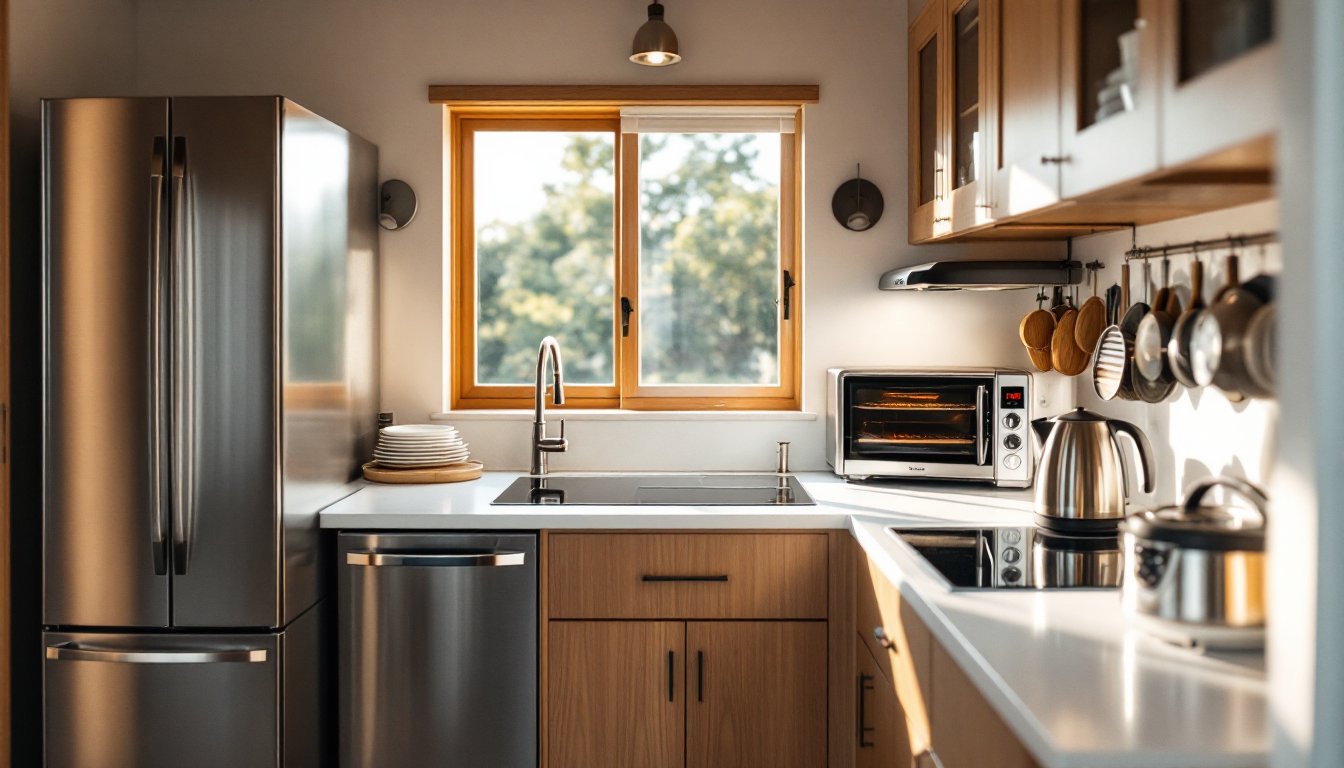
For cooking, a two-burner induction cooktop or portable induction hob beats a full range. Induction units heat faster than electric coils, they’re precise, and they generate less ambient heat than gas. A toaster oven with convection settings handles baking, roasting, and reheating in a footprint smaller than a microwave. The Tiny Home Kitchen Appliances: Maximize Your Space Like a Pro guide offers deeper insight into these space-savers.
Skip the full-size dishwasher. A tabletop or drawer-style dishwasher uses far less water and energy while taking up minimal counter or under-sink space. If you’re in a really tight spot, a good dish brush and an organized drying rack actually works fine.
Multifunctional Cooking Devices and Countertop Units
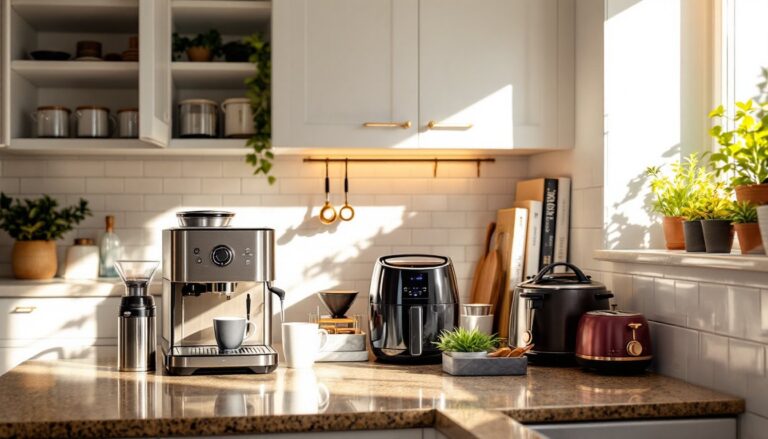
Multitasking appliances are your secret weapon. A rice cooker with a steamer basket handles side dishes and proteins. An Instant Pot or pressure cooker cuts cooking time and takes up minimal space compared to separate pots. An air fryer can replace both a deep fryer and some oven functions.
When evaluating these devices, check the wattage. Tiny house electrical systems sometimes have limited circuit capacity, so a 1500-watt air fryer might trip a breaker if you run your coffee maker at the same time. Most modern compact kitchens work fine with one high-wattage device per circuit.
Choose Small Kitchen Appliances: Transform Your Cooking Experience that nest or store vertically. A blender that fits inside a cabinet, measuring cups that hang on a hook, and a kettle that tucks behind the door add up to real space savings. The time you spend organizing prevents clutter from taking over.
Laundry and Bathroom Appliances That Save Space
Laundry in a tiny house often feels impossible, but compact solutions have evolved dramatically. You have three realistic options: combo washer-dryer units, stackable units, or portable washing machines paired with air-drying.
Combo units wash and dry in one cycle, taking up roughly the space of a standard top-load washer. The trade-off is longer dry times and slightly less load capacity. Look for units with at least 4.5 cubic feet of capacity and a moisture sensor that stops drying when clothes are done, saving energy.
Stackable washer-dryer pairs give you more flexibility. The washer goes on bottom and the dryer stacks on top, using the same footprint as a combo unit but with faster drying and better functionality for larger loads. This setup works great if you have room vertically.
Portable washers are compact and don’t require permanent installation. They’re honest about their limitations, you’re not washing a full king-size comforter in one load, but for everyday clothes, they work. Pair one with a drying rack or clothesline if venting a dryer isn’t feasible.
Combo and Compact Laundry Solutions
When shopping for compact laundry units, ignore marketing hype and focus on actual capacity. A “washer” that holds only 2 cubic feet won’t realistically serve an adult household for more than a few days before laundry day becomes mandatory. Aim for at least 4 cubic feet in a combo unit or 4.5+ cubic feet if stacking.
Water and energy usage matter in tiny homes. Front-load washers use significantly less water than top-load models, roughly 12 gallons per cycle versus 25+. Over time, this adds up, especially if you’re on a septic system. Heat pump dryers are energy-efficient alternatives to traditional vented dryers, though they dry slower.
For bathrooms, stay away from the temptation of a heated towel rack or instant hot water dispenser. These create unnecessary heat and electricity demand. A small ventilation fan is essential, though, humidity control prevents mold and keeps your space comfortable. Bathroom exhaust fans typically run 50-80 CFM (cubic feet per minute): make sure your exhaust ductwork is properly sealed and vented outside, not into an attic.
Climate Control and Storage Appliances
Heating and cooling in a tiny house operates differently than in a standard home. Compact spaces heat up and cool down quickly, so your HVAC strategy should focus on zone control rather than whole-house conditioning.
A ductless mini-split heat pump (inverter-style) is ideal for tiny houses. It delivers both heating and cooling with minimal ductwork, operates efficiently, and takes up negligible space. The outdoor condenser unit is compact, and the indoor head mounts high on a wall or ceiling. Installation requires a licensed HVAC tech, but the efficiency gains justify the cost.
If a mini-split isn’t feasible, a window air conditioner handles cooling for a single room. For heating, a small electric space heater works, but use it cautiously, it draws significant power and creates heat loss concerns in certain setups. Radiant heating panels are quieter and safer alternatives if you need supplemental warmth.
Refrigeration doesn’t stop at the kitchen. A compact upright freezer or chest freezer lets you buy in bulk and store efficiently. A wine cooler or beverage fridge sounds luxurious but eats power and space: if you want cold drinks, a simple cooler or your main fridge’s ice maker does the job.
Dehumidifiers are underrated in tiny homes. They actively control moisture, protecting your structure and your health. Run one year-round if your climate is humid: cycle it seasonally if you’re in a drier region. A 50-pint dehumidifier handles most tiny spaces and runs quieter than older models. Pair it with proper ventilation, exhaust fans in the kitchen and bathroom vent moisture outside rather than recirculating it.
Smart Purchasing Tips for Tiny House Appliances
Measure twice, buy once. Bring a tape measure to the showroom or photograph your space and the appliance dimensions side-by-side. Don’t rely on the listed “compact” claim, verify the actual measurements. Check depth especially: a 24-inch-wide refrigerator that’s 32 inches deep won’t fit if your space is only 30 inches.
Read reviews from people with similar living situations. A rave review from someone in a 2,000-square-foot house doesn’t tell you whether a dryer actually works in a 300-square-foot tiny home. Look for reviews from actual tiny house owners, not just general appliance reviews.
Budget for installation. A compact washer-dryer might be $1,200, but venting, plumbing, and electrical hookup could add another $300–$800. Factor this in before committing. Some appliances need GFCI outlets (required for bathrooms and kitchens per electrical code), which may mean adding a dedicated circuit.
Consider your power supply. Most tiny homes run standard 120-volt service, but some 240-volt appliances (larger air conditioners, electric ranges) need a dedicated circuit or service upgrade. Check your panel’s capacity before buying.
Look for Top Energy-Saving Appliances: Cut Costs and Help the Environment Today certifications. ENERGY STAR models cost a bit more upfront but save money monthly through lower utility bills. Over five years, efficiency often pays for itself.
When replacing old appliances, research Appliance Recycling: Transform Your Old Machines into Eco-Friendly Solutions options rather than dumping them. Many retailers offer haul-away services, and some old appliances contain valuable materials worth recovering.
Visit sites like The Kitchn for real-world reviews of small appliances and Apartment Therapy for inspiration on arranging compact spaces. Both offer honest assessments of what actually works in small footprints. Good Housekeeping’s 8 Best Appliances for offers a curated list if you want a quick reference guide.
Don’t impulse-buy. Spend a week using your space without a new appliance. Where do you really need more function? Where’s the bottleneck? Buy accordingly, not based on what’s on sale.