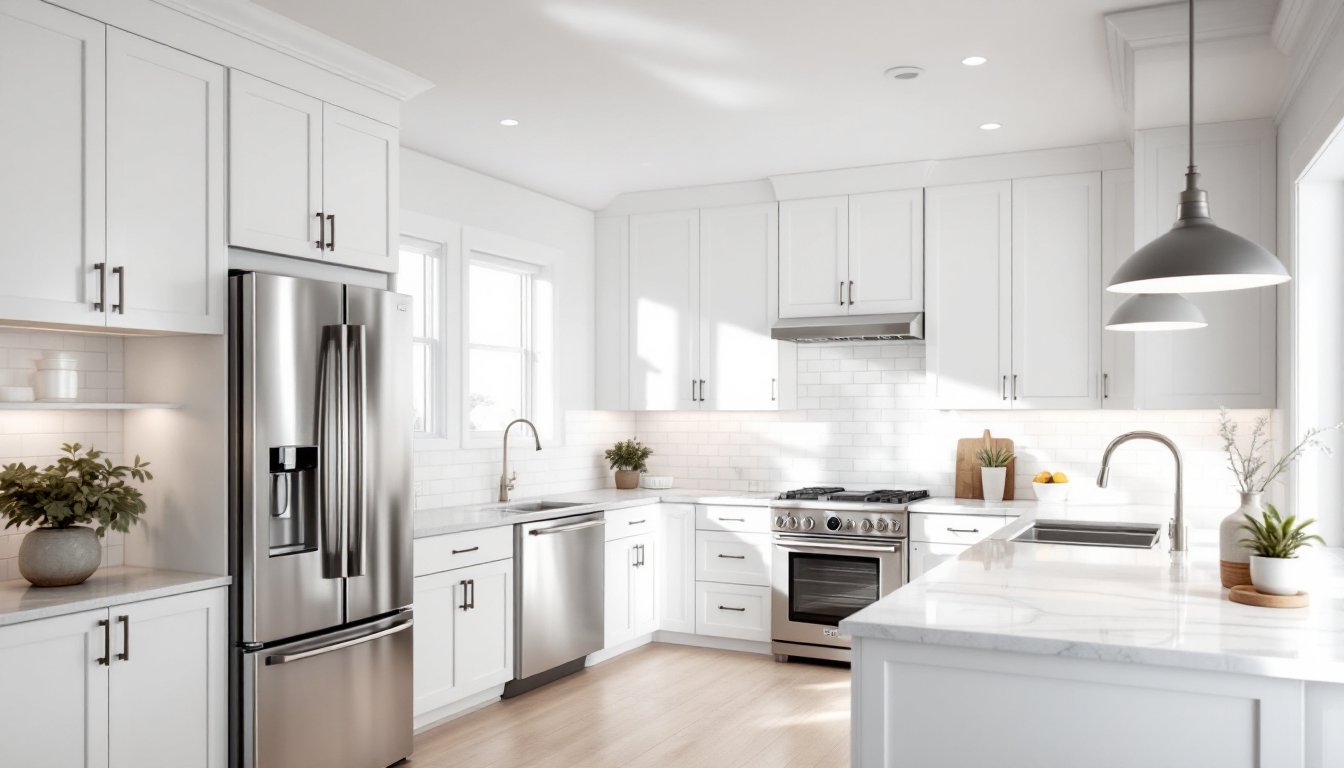
White kitchen cabinets paired with stainless steel appliances represent one of the most timeless and versatile design combinations in modern homes. This pairing works across nearly every design aesthetic, from sleek contemporary kitchens to farmhouse-inspired spaces, and remains one of the top choices for homeowners undertaking kitchen renovations. The appeal goes beyond trend cycles: it’s rooted in practical considerations like durability, visual balance, and the ability to accommodate changing décor accents over time. Whether you’re planning a full kitchen remodel or refreshing cabinetry and appliances, understanding how to execute this combination successfully, and maintain it long-term, is key to creating a space that looks and performs beautifully.
Table of Contents
ToggleKey Takeaways
- White kitchen cabinets with stainless steel appliances create a timeless, versatile design that works across contemporary, farmhouse, and transitional styles without dating quickly.
- The visual contrast between white cabinets and stainless steel appliances expands space and adds depth, while bouncing light to make stainless surfaces easier to maintain and less prone to visible fingerprints.
- Cabinet finish quality is critical—invest in cabinet-grade paint or polyurethane (not wall paint), choose semi-gloss or satin finishes, and ensure proper surface preparation to prevent peeling and adhesion failure.
- Select pure white for crisp, contemporary kitchens or cream/off-white for warmer farmhouse aesthetics, keeping in mind that brighter whites show dust more readily and require consistent cleaning.
- Maintain both materials with regular care: wipe white cabinets with mild soap and soft cloths, clean stainless steel with the grain using microfiber cloths and fingerprint-resistant sprays, and ensure proper ventilation to prevent moisture damage.
- This pairing is a safe investment for home resale, as buyers recognize white cabinets and stainless steel appliances as a modern, professional aesthetic that provides a neutral canvas for personalization.
Why This Color Pairing Works So Well
White cabinets and stainless steel appliances complement each other through contrast and visual breathing room. White is a neutral backdrop that expands the sense of space, while stainless steel provides subtle metallic accents that prevent the kitchen from feeling flat or sterile. The reflective quality of stainless appliances catches light and adds depth without introducing another bold color into the palette.
This combination also solves a practical problem: stainless steel appliances show fingerprints and water spots easily, so they benefit from a bright, clean surrounding environment. White cabinets bounce light toward stainless surfaces, making them easier to maintain visually. The pairing creates a professional, intentional look, it feels curated rather than accidental, which is why designers reach for it so often.
From a resale perspective, this combination is a safe bet. Buyers recognize it as a modern, clean aesthetic that won’t require immediate updates. Unlike trendy color combinations that date quickly, white and stainless has staying power. It also provides a neutral canvas for future owners or renters to personalize with hardware, backsplash materials, or island finishes.
Design Styles That Pair Perfectly With This Combination
Contemporary and Modern Kitchens
In contemporary kitchens, white cabinetry with stainless steel appliances is almost the default starting point. The clean lines of flat-panel or slab cabinet doors enhance the modern aesthetic, and the minimal hardware (often simple bar pulls or handle-less designs) keeps visual noise low. Stainless steel backsplash or accents around the range amplify the industrial-modern feel without overwhelming the space.
Pair this foundation with quartz or concrete countertops, open shelving with metal brackets, and minimal décor for a distinctly modern kitchen. The white-and-stainless palette allows other materials, like warm wood flooring or matte black light fixtures, to become secondary design features that add personality without competing with the cabinetry.
Farmhouse and Rustic Aesthetics
White cabinetry in a shaker-style or beadboard finish paired with stainless steel appliances also works beautifully in farmhouse kitchens. The key is balancing the industrial edge of stainless steel with warmer materials: butcher block or live-edge wood countertops, open shelving displaying vintage dishware, and wrought-iron or bronze hardware.
Stainless appliances in farmhouse settings feel less clinical when surrounded by natural textures, exposed beams, shiplap walls, or vintage pendant lighting. This approach combines the longevity and easy maintenance of modern appliances with the warm, inviting character of rural or cottage-inspired design. The white cabinets act as a bridge between the two aesthetics, preventing the space from feeling either too trendy or too dated.
Choosing the Right White Cabinet Finish and Style
Not all white is the same. Cabinet finishes range from bright, crisp pure white to warmer creams and soft off-whites. Your choice depends on lighting, surrounding materials, and your preferred aesthetic.
Pure white or bright white cabinets appear crisp and contemporary, especially under cool LED lighting. They show dust and fingerprints more readily, so they require consistent cleaning and occasional touch-ups. This finish works best in well-lit kitchens or modern spaces where the contrast with stainless appliances is intentional.
Cream or off-white finishes are more forgiving and feel slightly warmer. They hide minor imperfections better and work well in farmhouse or transitional kitchens. These warmer whites create a softer pairing with stainless appliances while still maintaining that clean, open feeling.
Paint quality matters. Cabinet-grade paint or polyurethane finishes, not wall paint, provide the durability needed for kitchen cabinetry. Look for semi-gloss or satin finishes that resist moisture and fingerprints better than flat finishes. Preparation is critical: proper surface prep, primer, and multiple coats determine longevity.
If you’re painting existing cabinets, ensure they’re solid wood or plywood, not veneer over particle board, which doesn’t hold paint well long-term. Budget for professional-grade products like Benjamin Moore Cabinet Paint or similar cabinet-specific systems. DIY painting is possible, but rushed prep work is the most common reason for peeling or adhesion failure. Resources like Houzz’s white kitchen inspiration gallery showcase various finishes and lighting scenarios to help you visualize options.
Practical Maintenance and Care Tips
White cabinets require consistent care to stay looking fresh. Dust and grease accumulate visibly on light surfaces, so plan for regular wipe-downs with a soft cloth and mild soap solution. Avoid abrasive cleaners or scouring pads that scratch paint. For stubborn grease or dried spills, a mixture of warm water with a small amount of dish soap works well: test on an inconspicuous area first.
Stainless steel appliances demand their own routine. They show fingerprints prominently, so using microfiber cloths and fingerprint-resistant sprays (like those designed for stainless steel) keeps them looking polished. Always wipe with the grain of the steel to avoid streaking. For a quick refresh, rubbing alcohol on a microfiber cloth removes smudges effectively.
Minor paint touch-ups on white cabinets are inevitable. Keep leftover paint from your original finish, properly sealed, it lasts years, for small repairs. A small artist’s brush works for touching up edges or corners.
Moisture is the enemy of both materials. White cabinets are vulnerable to peeling or warping if exposed to prolonged dampness, and stainless steel can develop rust spots if water sits on it. Ensure your range hood vents properly to the outside (not back into the kitchen), and wipe down both cabinets and appliances after steaming or boiling. Proper ventilation prevents long-term damage and keeps finishes looking newer longer.
When shopping for stainless steel dishwashers or other built-in appliances, choose models with adjustable venting features to prevent moisture backup into cabinetry. Installation quality matters as much as the appliance itself, poor sealing around appliances can trap water and destroy surrounding cabinet material over time. Organizations like The Kitchn offer detailed care guides for both painted cabinetry and stainless finishes. For those optimizing smaller footprints, tiny home kitchen appliances offer efficient solutions that maintain the same clean aesthetic in compact spaces.
Conclusion
White kitchen cabinets with stainless steel appliances remain the gold standard for good reason: they’re timeless, practical, and adaptable to countless design directions. Whether your kitchen leans modern, farmhouse, or transitional, this pairing provides a strong foundation that won’t feel dated in five or ten years. The key to success is choosing high-quality cabinet finishes, understanding the specific white tone that works for your space and lighting, and committing to consistent maintenance. When executed with attention to prep work and finish quality, this classic combination delivers both visual appeal and the durability that makes a kitchen feel like the heart of a home.