Walk into any functional kitchen today and you’ll notice something: small kitchen appliances have become as essential as a good cutting board. These compact powerhouses save time, reduce prep work, and let home cooks accomplish tasks that once required restaurant-grade equipment. Whether you’re grinding fresh coffee beans at dawn or making nut butter for the week, small kitchen appliances handle the heavy lifting without claiming counter real estate. Building a practical, efficient kitchen isn’t about chasing trends, it’s about selecting tools that earn their place. This guide walks you through the appliances that matter, how to choose them for your space and budget, and why they’re worth the investment in 2026.
Table of Contents
ToggleKey Takeaways
- Small kitchen appliances are efficiency multipliers that save time, reduce prep work, and solve real cooking problems—like cutting hand-mixing time from 20 minutes down to 3 minutes with a stand mixer.
- The most practical small kitchen appliances for any kitchen include coffee makers ($40–$200), food processors ($120+), blenders ($50–$500), and toaster ovens ($150+), offering versatility without claiming excessive counter space.
- To choose the right small kitchen appliances for your home, measure available space honestly, prioritize based on your actual cooking habits over a week, and set a realistic budget of $450 for well-rounded kitchen essentials.
- Invest in quality appliances with strong warranties (3+ years) and read real-world user reviews from cooking publications and retailers rather than relying solely on technical specifications.
- Handle appliances in-person at kitchen-focused retailers before purchasing to ensure they fit your workflow and kitchen layout, especially since online convenience can’t replace hands-on evaluation.
Why Small Kitchen Appliances Matter for Modern Cooking
Small kitchen appliances solve real problems. They free up the stove when you need it most, reduce cleanup time, and let you batch-prep meals on Sunday for the week ahead. Consider this: a stand mixer takes 20 minutes of hand-mixing down to 3 minutes. An immersion blender sits on a shelf beside your stove instead of occupying a cabinet corner like its full-size counterpart.
In kitchens where counter space is tight, and most kitchens fit that description, these appliances pull their weight because they store easily or live on a shelf. They also deliver versatility. A food processor handles everything from dicing onions to making fresh hummus. An air fryer crisps without deep frying. A toaster oven broils, bakes, and reheats more efficiently than your full oven when you’re cooking for one or two.
The practical truth is simpler: small kitchen appliances bridge the gap between what your full-size range and cooktop can do and what hand tools alone can accomplish. They’re not luxury items, they’re efficiency multipliers.
Must-Have Small Kitchen Appliances for Every Kitchen
Coffee Makers and Espresso Machines
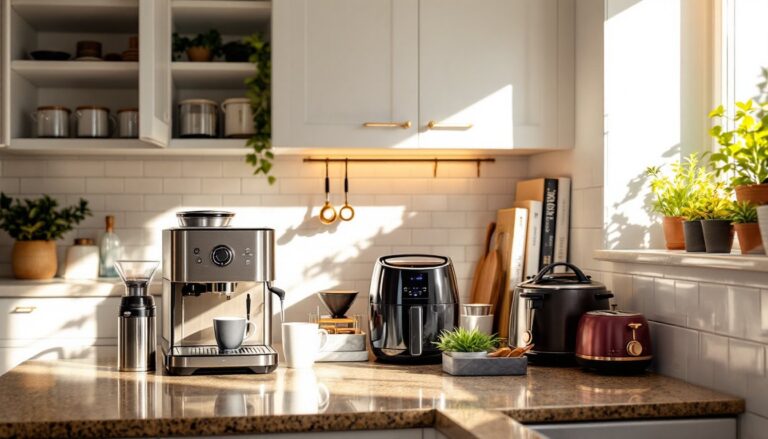
You can skip the daily trip to the café once you have reliable coffee equipment at home. A basic drip coffee maker handles the fundamentals, automatic brewing, a thermal carafe to keep coffee hot for hours, and dishwasher-safe components. Budget models run $40–$80 and work fine. Mid-range options ($100–$200) add programmable schedules and better temperature control.
If you prefer espresso or specialty drinks, an espresso machine sits on a different tier. A manual lever machine requires skill and patience but produces excellent shots at $200–$400. Semi-automatic machines ($400–$800) let you control extraction time and pressure more precisely. Fully automatic machines dial in everything and cost $800 and up. For most home cooks, a lower-end semi-automatic or a manual machine offers the best return on investment.
Immersion blenders also deserve mention here, not for coffee preparation, but for frothing milk without a separate steamer. A $30–$60 frother creates microfoam for lattes and cappuccinos, adding café-quality drinks to your kitchen arsenal.
Food Processors and Blenders
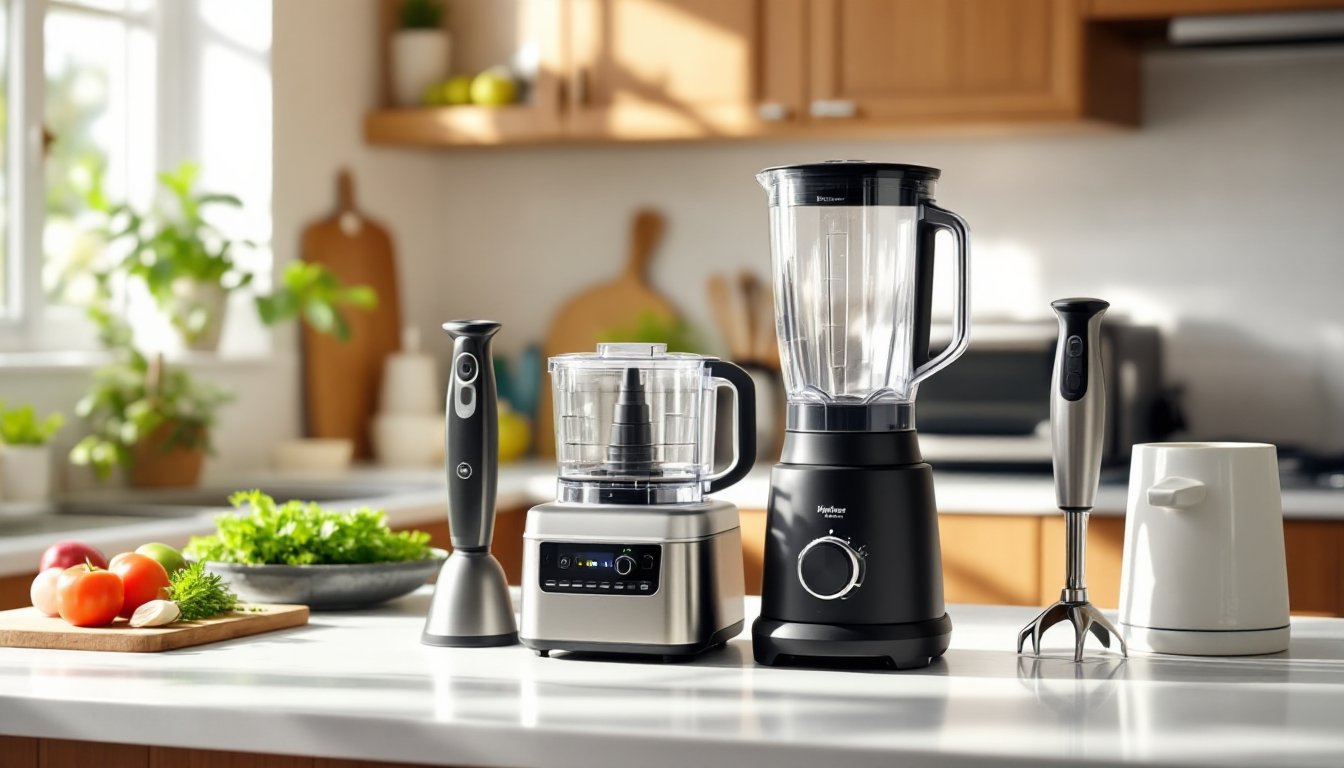
A food processor and a blender handle different jobs, though some modern models blur those lines. Food processors chop, slice, dice, and puree with a flat blade or serrated disc. Their wide, flat bowl and pusher design let you control texture. They’re the workhorse for slicing vegetables, making pie crust, grinding nuts, or creating fresh salsa. Look for a 14-cup or larger capacity if you cook for a family: smaller 8-cup models work for individuals or couples.
Blenders excel at silky purées, smoothies, and soups. A high-powered blender (1000+ watts, $300–$500) liquefies whole vegetables and frozen fruit into butter-smooth results. Budget blenders ($50–$100) work fine for smoothies and basic pureeing. Mid-range models ($150–$250) strike a balance between power and cost.
Practical cooks often own both. Store them on a shelf or in a tall cabinet, food processors need about 8 inches of clearance for the feed tube, and blenders need headroom for the pitcher. When choosing, consider your counter layout first.
Choosing the Right Appliances for Your Space and Budget
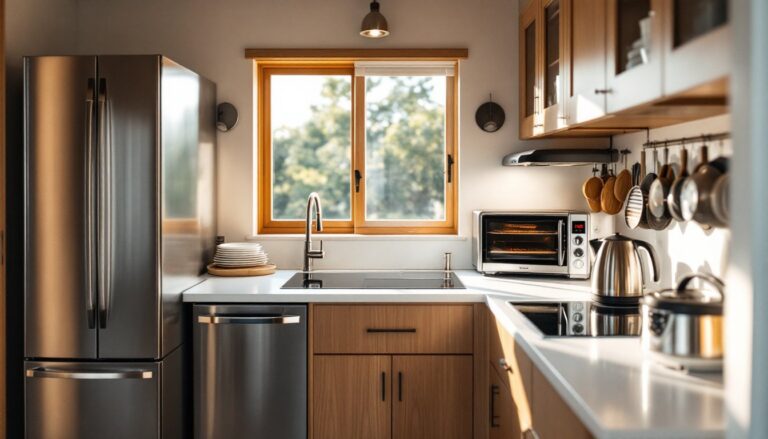
Step one: measure your available space honestly. Pull out a tape measure. Note the height and depth of open counter or shelf real estate. Many home cooks overestimate available space and end up storing appliances in awkward corners where they never get used.
Step two: prioritize by how you actually cook. If you make coffee twice daily but rarely bake, a stand mixer isn’t worth counter real estate. If you prep vegetables constantly, a food processor earns its spot. Track what you manually do in the kitchen for a week, peeling, chopping, mixing, blending. That’s your shopping list.
Step three: set a realistic budget. Small appliances range from $20 (basic toaster) to $1,200 (premium espresso machine). A well-rounded kitchen might include a coffee maker ($80), food processor ($120), blender ($100), and toaster oven ($150), roughly $450 for genuine workhorses. Starting smaller and adding over time is smarter than buying everything at once.
Research specific models through tested reviews. Publications like Good Housekeeping test small kitchen appliances in real conditions, not lab benchmarks. Residential feedback matters more than specs. You’ll find user reviews at retailers and on cooking sites like The Kitchn that cover practical durability and whether an appliance actually fits modern kitchens.
Don’t ignore warranty and customer support. A $200 blender with a 1-year limited warranty feels riskier than one with 3-year coverage and a hassle-free replacement policy. Brands like Vitamix and KitchenAid back their products because they know they’ll last, and that’s built into the price.
When evaluating a small kitchen appliance store, check whether they stock models in person so you can feel the weight and heft before buying. Online retailers offer convenience, but handling the equipment first matters. Kitchen-focused retailers often have staff who use these tools daily and can steer you toward what’s truly practical versus what’s just trendy. Local retailers also typically offer better return policies if an appliance doesn’t fit your workflow after a week of testing.
Conclusion
Small kitchen appliances aren’t nice-to-haves, they’re time and labor savers that transform how you cook daily. Start with one or two tools that align with your actual cooking habits, measure your space first, and buy quality over quantity. The right appliances pay for themselves through time saved and meals prepared. Build your kitchen deliberately, not impulsively.