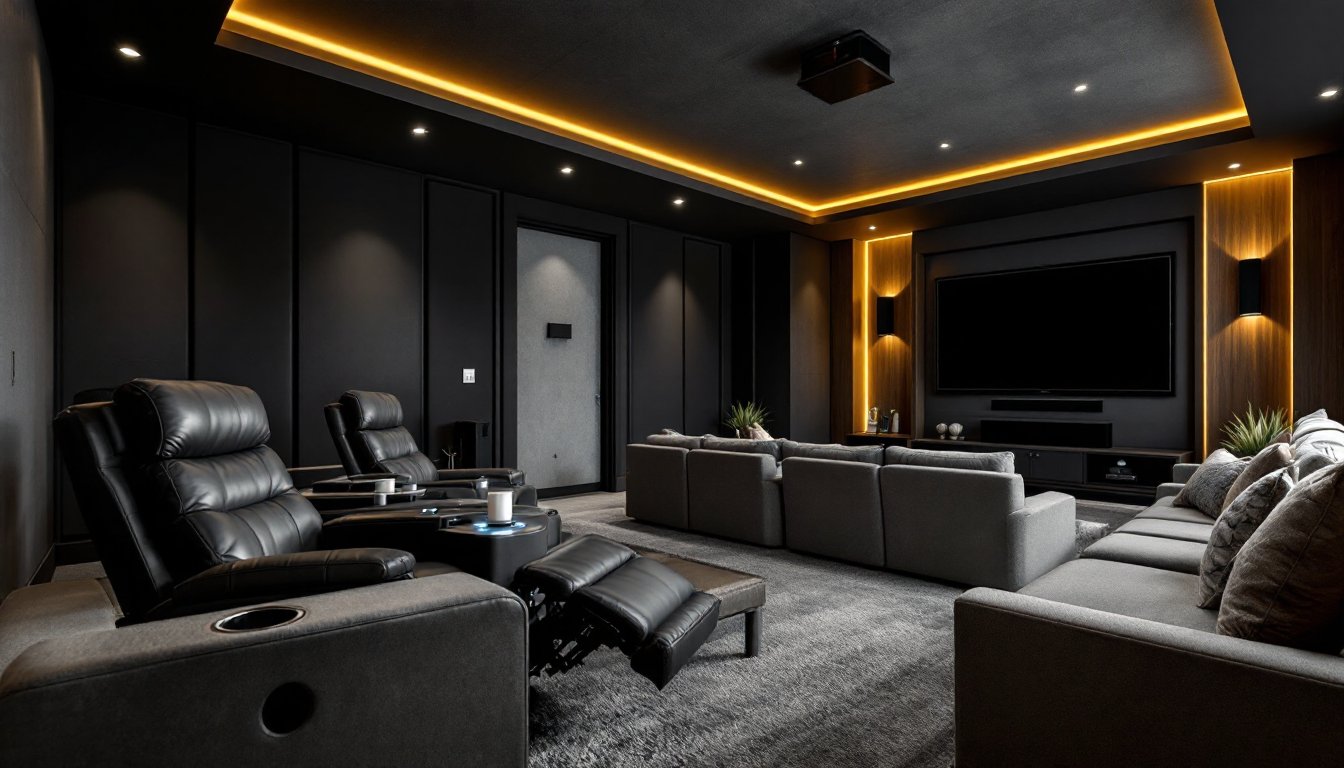
Building a home theater is an exciting project, but the viewing experience hinges entirely on where you sit. Home theater seating isn’t just about comfort, it’s about creating a space where your family and guests actually want to spend time. Whether you’re retrofitting an existing room or starting from scratch, choosing the right seating sets the tone for everything else in your theater. This guide walks you through the styles, features, and budgets available in 2026, so you can make an well-informed choice that fits both your space and your lifestyle.
Table of Contents
ToggleKey Takeaways
- Home theater seating transforms a viewing space into a destination by improving ergonomics, room layout, and aesthetic appeal while anchoring the overall theater experience.
- Manual recliners ($400–$800) are budget-friendly and reliable, while power recliners ($800–$2,000+) offer convenience with infinite adjustment, heated lumbar support, and USB ports but require electrical access.
- Modular and sectional configurations provide flexible layouts that adapt to odd-shaped rooms and can be reconfigured or replaced, making them ideal for evolving home theater needs.
- Frame construction, spring suspension, and foam density matter far more than upholstery: prioritize hardwood frames with eight-way hand-tied or sinuous springs and high-density foam (1.8 lbs/cubic foot or higher) for lasting comfort.
- Mid-range seating ($700–$1,800 per seat) from brands like Palliser, Serta, and Berkline delivers the best value for serious DIYers, offering hardwood frames, power features, and 5-year motor warranties that last 10+ years.
- Test-sit models at showrooms, request swatches before purchasing, and thoroughly read verified customer reviews to avoid costly mistakes on this long-term investment.
Why Home Theater Seating Matters for Your Space
Most DIYers focus on the screen, speakers, and cables, then plop in mismatched furniture. That’s a mistake. Good seating transforms a room from a viewing space into a destination. When you’re sinking hours into movies, gaming, or sports, your back, neck, and hips know the difference between a folding chair and purpose-built theater seating.
HomeTheater seating also dictates room layout and even acoustics. Bulky recliners need clearance for the footrest, which affects row spacing and viewing angles. Modular sectionals adapt to odd-shaped rooms that standard furniture can’t accommodate. Before you pick a style, measure your space, wall-to-wall, ceiling height, doorways, and HVAC vents. Note how many people typically watch together: that drives row depth and seat count.
Beyond ergonomics, theater seating anchors the room’s aesthetic. A leather recliner reads different from a fabric sectional, and that choice ripples through lighting, decor, and the whole vibe. Think about your family’s actual use patterns, not Pinterest dreams. If you have kids who bounce on furniture or pets, leather or performance fabrics matter. If you live alone and want luxury, a premium recliner might be worth the investment.
Top Seating Styles and Configurations
Recliners and Power Seats
Manual recliners are the entry point, affordable, reliable, and no electrical hookups needed. A quality manual recliner runs $400–$800 and lasts years if you don’t abuse the mechanism. Pull a lever or tug a handle, and the backrest reclines while the footrest extends. The trade-off: you need room to operate the footrest without hitting a wall or table, and manual models won’t hold a recline as smoothly as powered ones.
Power recliners ($800–$2,000+) offer one-touch recline, built-in USB ports, and heated lumbar support on premium models. They’re quieter than you’d expect and adjust infinitely, not just to set positions. The catch is electrical access, you’ll need an outlet within 6 feet or you’re running extension cords, which looks sloppy. Motor-driven recliners are heavier and trickier to move during setup or renovation.
For power seats, check the warranty on the motor and frame. A 5-year motor warranty from a reputable brand (like Serta, Ashley, or Berkline) beats a 1-year catchall. Also inspect whether the seat has a manual backup mechanism in case power fails, cheap models don’t, and you’re stuck reclined at a 45-degree angle.
Sectional and Modular Options
Modular sectionals give flexibility that traditional seating can’t match. Picture L-shaped, U-shaped, or custom configurations that fit your room’s footprint. Individual modules can be rearranged or replaced if one piece wears out. A 4-seat modular system runs $1,200–$3,000 depending on fabric and frame quality.
The appeal is obvious: you’re not locked into one layout. Modular pieces work in living rooms too, so if your theater room gets repurposed down the road, the seating doesn’t become obsolete. Many modular lines offer power recline in individual seats, console tables with cup holders, and storage drawers built into the base.
The downside is assembly and fit. Modular seating requires careful planning, measure the doorway, staircase, and aisles you’ll need to navigate during delivery. Modules are lighter individually but bulkier overall. Some modular systems have small gaps between pieces that collect dust and crumbs: check reviews and photos before buying. Also confirm that the modules connect securely (usually via bolts or straps) so they don’t shift during use.
Key Features to Evaluate When Choosing Theater Seating
Comfort, Materials, and Durability
Leather vs. fabric is the first split. Genuine leather ($150–$250 per yard) feels premium, cleans easily, and ages well, but it cracks if you don’t condition it regularly and sweats in warm climates. Bonded leather (thin veneer over polyurethane) looks similar but doesn’t breathe and peels after a few years: avoid it unless the price is rock-bottom and you expect short-term use.
Fabric offers more texture variety and breathability. Microsuede, performance polyester, and microfiber resist spills and pet damage better than plain upholstery. Top-tier performance fabrics (like those used on sailboat interiors) cost more but handle real life: kids, drinks, sunlight exposure. Read the fabric weight, measured in ounces per square yard. Anything under 12 oz is too flimsy for theater seating: aim for 14–18 oz for durable daily use.
Frame construction matters more than upholstery. A hardwood frame (oak, maple, ash) with eight-way hand-tied springs or sinuous (wire) spring suspension feels and lasts longer than particle-board frames with foam-only construction. This is invisible, but it’s where quality brands differ from budget options. According to reviews from Digital Trends, high-end theater seating often uses kiln-dried hardwood and double-sinuous springs, not single-layer foam.
Check the cushion quality too. High-density foam (1.8 lbs/cubic foot or higher) holds its shape after thousands of sinks. Low-density foam ($0.5–$1.2 lbs) feels great new but flattens within a year. Gel-infused foam or memory foam ($80–$120 per yard of upholstery) adds cost but improves comfort on long viewing days. Lumbar support and adjustable headrests aren’t luxuries: they’re preventive. If you’re sitting for 3+ hours at a time, your spine will thank you.
Durability comes down to seams, zippers, and stitching. Look for double-stitched seams and reinforced stress points (armrest joints, where the backrest meets the seat). Test the reclining mechanism by opening and closing it a few times, it should move smoothly without grinding sounds. Ask the vendor how many cycles (open/close movements) the mechanism is rated for: 50,000+ cycles is industry standard for residential use.
One practical tip: order swatches before committing. Leather and fabric look and feel different in person than on a screen, and your room’s lighting affects how colors read. Many retailers offer 30-day trial windows or return policies: use them. Ordering a $2,000 sectional without seeing the fabric first is how buyers end up disappointed.
Budget-Friendly and Premium Seating Solutions
Budget theater seating ($300–$700 per seat) covers basic manual recliners and entry-level modular pieces. Popular retailers like IKEA, Walmart, and Wayfair stock solid options in this range. A $500 manual recliner from a brand like ACME or Relax-A-Lounger will recline smoothly and last 5–7 years with normal use. Upholstery might be basic polyester, but it’s serviceable. For a small theater room or occasional use, this tier makes sense.
The catch: frame quality is hit-or-miss, warranties are shorter (1–2 years), and customer service is minimal. If something breaks, replacement parts can be hard to source. Reviews on Amazon and specialized furniture sites expose weak spots: spend 30 minutes reading user feedback before buying.
Mid-range seating ($700–$1,800 per seat) is where most serious DIYers land. Brands like Palliser, Serta, and Berkline offer hardwood frames, sinuous springs, and decent upholstery durability. Power recline, USB charging, and cup holders become standard. A $1,200 power recliner with genuine leather or high-grade fabric will feel noticeably better than budget options and last 10+ years. Warranties extend to 5 years on the motor, and replacement parts are readily available.
This tier suits full home theaters where you’re investing in the whole room, screen, sound, lighting. Resale value also holds better if your living situation changes.
Premium seating ($1,800–$5,000+ per seat) brings concierge customization, leather hides hand-selected for grain and color, and motorized functions (tilt, lumbar adjustment, seat ventilation, massage). Reviews from Tom’s Guide frequently highlight luxury brands like Ekornes, Stressless, and Theatre Room Seating for their craftsmanship and longevity. These pieces are investments, they appreciate in comfort and reliability the longer you own them.
Premium doesn’t always mean overstuffed. Minimalist theater seating from high-end brands uses sleek frames and precision-molded cushions. If your home theater doubles as a media room for daytime use, premium seating fits the aesthetic better than chunky recliners.
Whatever your budget, prioritize frame and spring quality over upholstery flashiness. A basic fabric on a solid hardwood frame beats beautiful leather on a particle-board base. Also factor in delivery and setup costs, many furniture retailers charge $100–$300 for delivery and assembly, especially for heavy recliners or sectionals. CNET’s home automation guides often mention built-in integration for smart features, which can drive price on premium models. Cheaper options lack USB, heating, or app control, but those aren’t dealbreakers if your theater is primarily passive viewing.
Measure your room, read recent user reviews from verified purchases, and if possible, test-sit similar models at a showroom before ordering online. Theater seating is a long-term purchase: getting it right upfront saves regret and costly replacements.