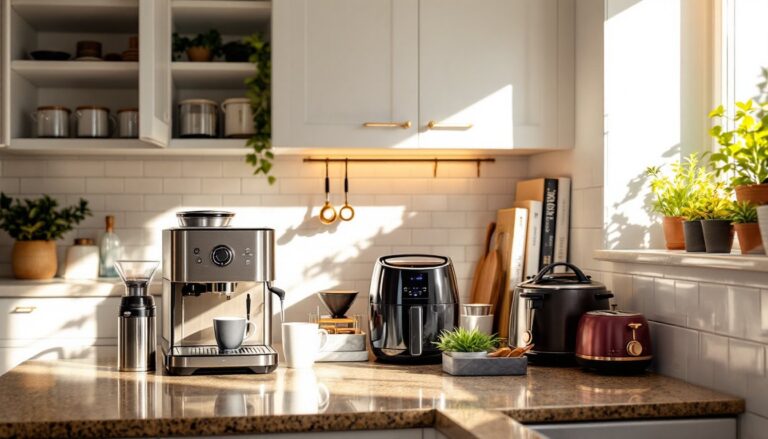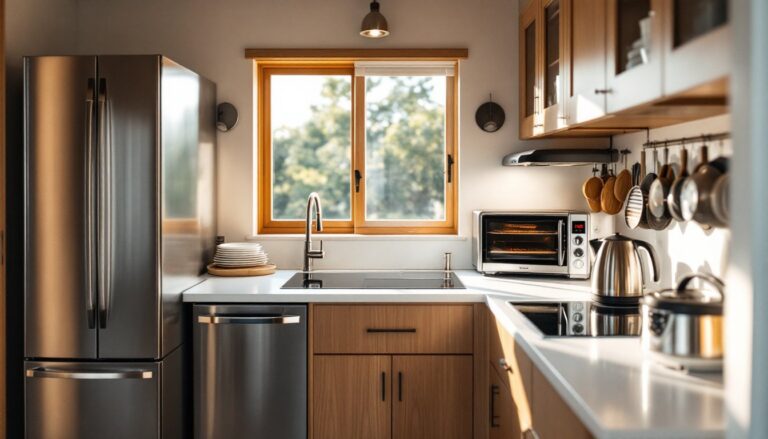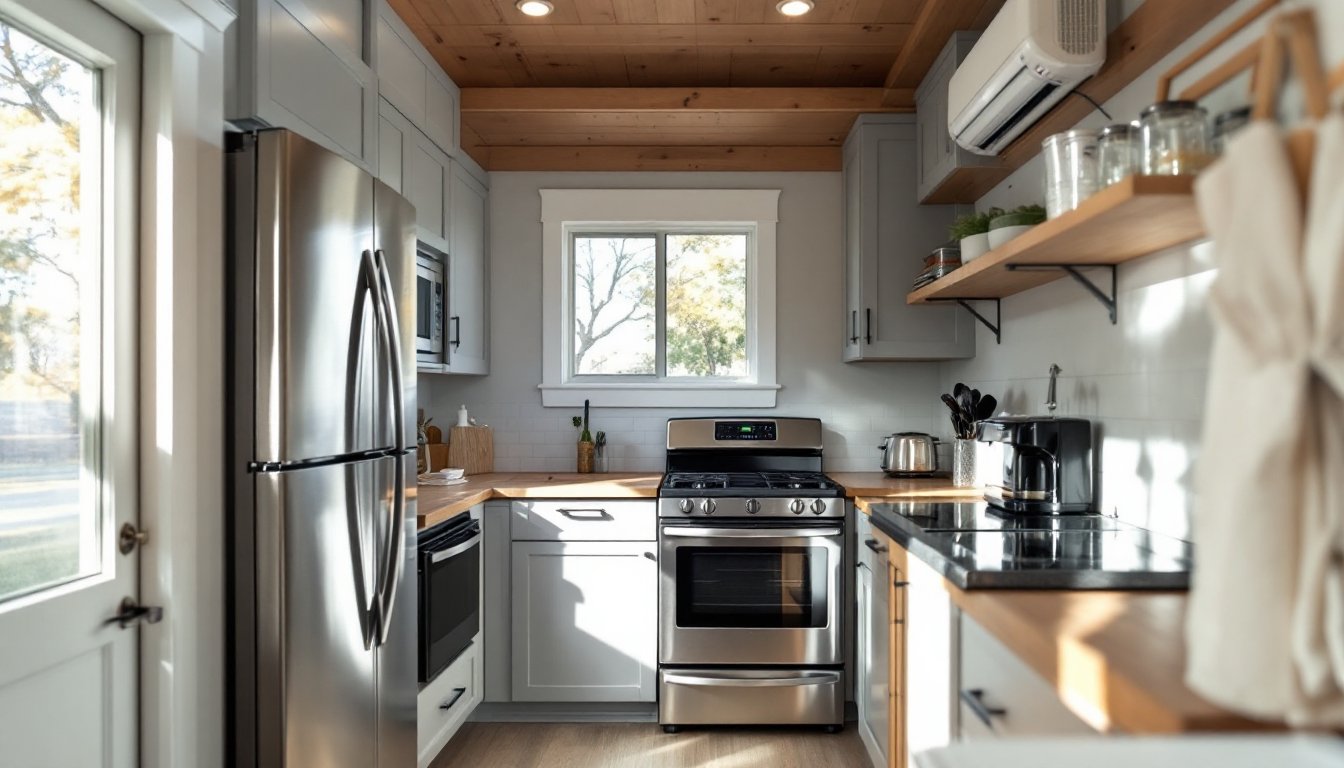
Living small demands smart choices. When you’re working with 300 to 500 square feet, every appliance either earns its spot or becomes clutter. The right tiny house appliances don’t just fit, they perform at full capacity without the bulk. Choosing equipment designed for compact living means you won’t sacrifice cooking power, laundry capability, or climate comfort. This guide walks through the appliances that actually work in small spaces, with honest assessments of what replaces what and where you might need to get creative.
Table of Contents
ToggleKey Takeaways
- Appliances for tiny houses must balance footprint, weight, and utility demands—a standard 18-cubic-foot refrigerator blocks walkways, while 7–10 cubic-foot compact models maximize usable space without sacrificing performance.
- Compact kitchen setups thrive on flexibility: a 24-inch electric range, countertop induction cooktop, and convection toaster oven eliminate the need for oversized equipment while reducing energy costs by up to 70%.
- Laundry solutions depend on your plumbing infrastructure—choose between ventless combo units, stackable pairs, or compact washers with rack drying based on space, ceiling height, and your lifestyle rhythm.
- Mini-split air conditioning systems and zone heating with smart space heaters prevent energy waste by conditioning only occupied areas, a critical strategy since climate control consumes the most energy in small homes.
- Multi-function appliances like Instant Pots and combination convection-air fryer units replace three to four single-purpose gadgets, dramatically reducing clutter while maintaining full cooking capability in minimal square footage.
Why Appliance Selection Matters in Small Spaces
Appliance choice defines whether a tiny home feels cramped or livable. In conventional homes, you have room to work around inefficiencies. In a small space, every decision compounds. A full-size refrigerator that blocks your kitchen’s only walkway isn’t just inconvenient, it’s a planning failure.
Tiny house appliances solve three core problems: floor footprint, weight distribution (important for trailers and small foundations), and utility demand. An oversized heating system doesn’t just waste energy: it can overload a tiny home’s electrical panel. Similarly, a traditional washer-dryer combo demands space, water, and venting that small homes often can’t spare.
Beyond practical fit, small appliances change how you live. You’ll cook differently with a compact range, shop more frequently with a smaller fridge, and may dry laundry on racks instead of in a machine. These aren’t compromises if you choose the right equipment, they’re just different rhythms. Understanding what matters in your space versus what’s negotiable helps you invest in the right tools for your lifestyle.
Compact Kitchen Appliances That Deliver Full Functionality
Refrigerators and Freezers for Tiny Homes
A refrigerator is non-negotiable, but its size is. Standard 18-cubic-foot models don’t fit most tiny homes: most compact options range from 7 to 10 cubic feet. Look for Energy Star-rated mini fridges with usable freezer space, many cheap compact models have freezer compartments the size of a shoebox.
For tiny home owners, compact refrigerators with separate freezer drawers (rather than over-under sections) maximize usable space. Danby, Midea, and Whirlpool Compact lines offer models around 9 cubic feet with actual functionality. Count on spending $400–$700 for reliable equipment: the cheapest options often fail within 2–3 years.
If frozen storage is essential, consider a separate compact chest freezer (4–5 cubic feet) against a second wall instead of cramming everything into one undersized unit. Chest freezers are more efficient and use dead wall space better than under-counter units. Just make sure your tiny home’s floor can handle the weight, this is structural, not optional.
Cooking Essentials: Stoves, Ovens, and Countertop Alternatives
A full 30-inch range usually doesn’t fit. Most tiny homes accommodate 20–24-inch compact ranges or electric cooktops with a separate wall-mounted oven. A 24-inch electric range gives you four burners and an oven at roughly half the footprint of standard equipment.
If your space truly can’t spare even that, countertop cooking becomes your strategy. A high-quality induction cooktop (which requires magnetic cookware) heats faster, cools faster, and uses 70% less energy than electric coil burners. Pair it with a tabletop convection oven and you’ve covered most cooking needs without permanent installation.
For baking and roasting, a compact convection toaster oven ($200–$400) replaces a full oven for everyday use. It preheats faster, costs less to run, and takes up counter space instead of eating into your layout. Serious bakers in tiny homes often use these plus a small kitchen appliances strategy that combines multiple specialized tools instead of one big multipurpose unit.
Many tiny home owners skip a traditional oven entirely, relying on an Instant Pot, air fryer, or countertop convection oven. This works if you cook simply and don’t entertain often, be honest about your actual baking frequency before committing to either path.
Space-Saving Laundry Solutions
Traditional washer-dryer combos are convenient in conventional homes but problematic in tiny houses. They require dedicated water supply, drain lines, and venting, infrastructure costs that may exceed the appliance price in a retrofit.
Your actual options depend on your plumbing setup:
-
Ventless washer-dryer combo units (one integrated machine) compress both functions into 24–27 inches wide. They’re slow (cycles run 3–4 hours) and have small capacities, but they fit. Expect $1,200–$1,800 for newer models. The heat-pump models (LG and Bosch make quality units) use 60% less energy than traditional venting dryers.
-
Stackable washer-dryer pairs fit if your ceiling height allows. This requires two units but gives you standard capacity and faster cycles than combo machines. You’ll need 27 inches of floor space and roughly 80 inches of height.
-
Compact washing machine + rack drying works if you can sacrifice convenience. A small-capacity front-loader ($500–$800) handles laundry, and hanging clothes to dry (or using a moisture-absorbing rack) eliminates venting needs. This is genuinely livable if you own fewer clothes and do laundry frequently.
-
Laundromat visits are the honest choice for many tiny home owners. Some calculate that quarters and occasional laundry time cost less and require less infrastructure than installing a small washer. Do the math for your situation.
Whatever path you choose, appliance recycling considerations matter when upgrading. Know the disposal costs before committing to new equipment.
Climate Control Without Bulk: Heating and Cooling Options
Heating and cooling consume the most energy in tiny homes and demand the most careful sizing. A conventional HVAC system overshoots a small space’s needs and wastes energy cycling constantly.
For heating: Radiant floor heating (if installed during construction) or wall-mounted electric baseboard heaters keep profiles low. Space heaters (Dreo and Levoit make compact, thermostat-controlled models) provide zoning, heat only occupied rooms. Smart models ($150–$250) prevent dangerous overheating and reduce phantom energy draw. Propane heaters work in some jurisdictions but require venting and clearance space: check your local building code.
For cooling: Window or through-wall mini-split air conditioning units (a single outdoor condenser with one or two indoor wall-mounted heads) are standard in tiny homes. They’re quieter, more efficient, and less intrusive than window units. Installation requires a professional to mount the outdoor unit and run refrigerant lines, but a single-head system runs $1,500–$2,500 installed.
If mini-splits aren’t feasible, a smart window air conditioner with a programmable thermostat ($400–$800) handles one room. Layer in ceiling fans and cross-ventilation: operable windows and skylights cost nothing to use effectively.
For tiny homes on wheels, sealed ductless systems are essential because they don’t require permanent installation. For stationary tiny homes, check whether your foundation and roof structure can support traditional HVAC. Oversizing equipment guarantees failure: undersizing means discomfort. Real HVAC contractors (not big-box installers) understand load calculations for small spaces.
Smart Storage and Organization Appliances
Storage appliances, pantry systems, beverage coolers, and extra freezers, sound luxury until you realize they’re structural necessity in tiny homes. Limited built-in storage means you can’t just stuff items behind cabinet doors.
Compact beverage coolers ($200–$600) serve double duty: they hold beverages cold without dominating counter space, and they can be tucked under a counter or table. A 24-inch width undercounter model becomes part of your layout instead of sitting awkwardly on top of the fridge.
A small upright freezer (3–5 cubic feet, $300–$500) lets you stock bulk items without a massive footprint. Position it against a dead wall or corner and suddenly meal planning changes, you can buy in bulk at farmers’ markets and cook seasonally instead of shopping two days a week.
Vacuum storage bags and shelf-mounted organizers aren’t appliances, but they solve the problem appliances create: stuff takes up space. In tiny homes, organization systems that maximize cabinet depth and vertical space prevent purchasing duplicates because you forgot what you own.
Smart pantry solutions from sources like Good Housekeeping’s small space appliance reviews and Apartment Therapy’s organization guides offer tested strategies for stacking, rotating, and labeling. These aren’t appliance-specific tips, but they integrate with whatever equipment you choose.
The real win in tiny homes is choosing one multi-function appliance instead of three single-purpose gadgets. An Instant Pot (pressure cooker + slow cooker + rice cooker + steamer) replaces four separate machines. A combination convection oven and air fryer handles what you’d normally need two devices to do. Think stacking function, not stacking appliances.